Raising Health Literacy Improves Wellness

The strongest predictor of an individual’s health status is not age, income, or ethnic group. It is health literacy skills.

Health literacy is the ability to read, understand and effectively use basic medical instructions and information. Low health literacy can affect people of any age, race, background, or education level. You don’t need reading literacy to acquire health literacy.

People with low health literacy are often less likely to follow treatment and self-care plans. They fail to seek preventive care and are at a higher risk for hospitalization. In addition, when hospitalized, they remain in the hospital nearly two days longer. Adults with low health literacy average 6 percent more hospital visits overall. Their health care costs are four times higher. Lower health literacy has also been linked to errors in patient care.

Half of American adults have difficulty understanding health information. Patients with low health literacy are often uncomfortable asking important questions of their doctor, nurse, or pharmacist. They are often embarrassed or ashamed to admit they have difficulty understanding health information or instructions. They don’t want to appear “stupid” or waste a busy doctor’s time. They may miss out on important details on how to prepare for a medical test or procedure. They may not understand the importance of a new medication. As a result, they don’t take medications as directed and they avoid basic care.

Other factors that hinder understanding medical information or instructions for patients are intimidation, fear, and vulnerability. Often times, patients are in shock upon hearing a diagnosis. They may have other stress factors to deal with within their family. Singular health conditions are often difficult to understand and multiple health conditions compound the difficulty and are often confusing to treat.

The amount of information that patients are expected to absorb in their brief and often rushed visit to the doctor’s office or pharmacy can be overwhelming. Add to that technical health care language, mysterious acronyms and unfamiliar words and it is not a wonder how confusion can set in. People tend to fear what they don’t understand and this often leads to patients refusing necessary procedures such as pap smears, mammograms or colonoscopies.

If half of Americans face health literacy problems, it is more significant for the Native American population, in particular Native elders. Since health literacy is so strongly linked to chronic disease prevention, it is needed more than ever with diseases such as Type 2 Diabetes and arthritis reaching the AIAN demographic at alarming rates. You can’t effectively monitor blood sugar levels without health literacy.

According to J. Goody, author of “Literacy in Traditional Societies,” eighty percent of the world’s population lives in oral and visual cultures. Listening and watching have historically been how they have preferred to learn their information. In the dawn of the digital age, many people feel our societies are gravitating back to that mode of education.

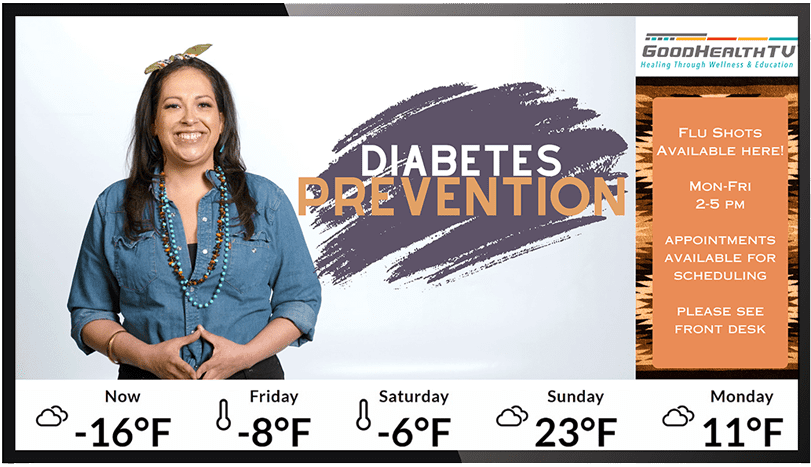
Newer technologies offer health information in a more interactive and engaging manner. Digital media addresses audio, visual and kinetic learning. Information delivered on GoodHealthTV® can be easier for patients to understand and retain than a pamphlet or other printed media. Even patients with higher health literacy are increasing their knowledge with Internet searches and websites. Most medical-related websites don’t simply deliver their message in the printed form. Video is a mainstay of the most successful web tools.

For example in a September 2008 study conducted by the Kaiser Family Foundation, the Foundation worked with writers from the popular television show “Grey’s Anatomy”. The episode featured a health care topic not readily understood by audiences: mother-to-child HIV transmission. Telephone surveys were conducted before and after the episode aired. Following the airing of the episode, viewers’ knowledge about mother-to-child HIV transmission rates rose substantially. The proportion of viewers who were aware that, with proper treatment, there is more than a 90% chance of an HIV-positive woman having a healthy baby increased from 15% to 61%. The new information was still retained by many six weeks later. The report concluded “For health organizations or those in the medical profession, this is a strong message that entertainment television is… a health educator.”

Karen Katen, president of Pfizer Global Pharmaceuticals, states “Low health literacy is the problem… clearer health communications is the solution.” GoodHealthTV® can help patients improve their health literacy skills by stressing the importance of letting your doctor, nurse, or pharmacist know if you don’t understand what they need to do. Many patients need to be told that their doctor wants them to know all they can about their condition, why this is important for your health, and steps to take to keep your condition under control.

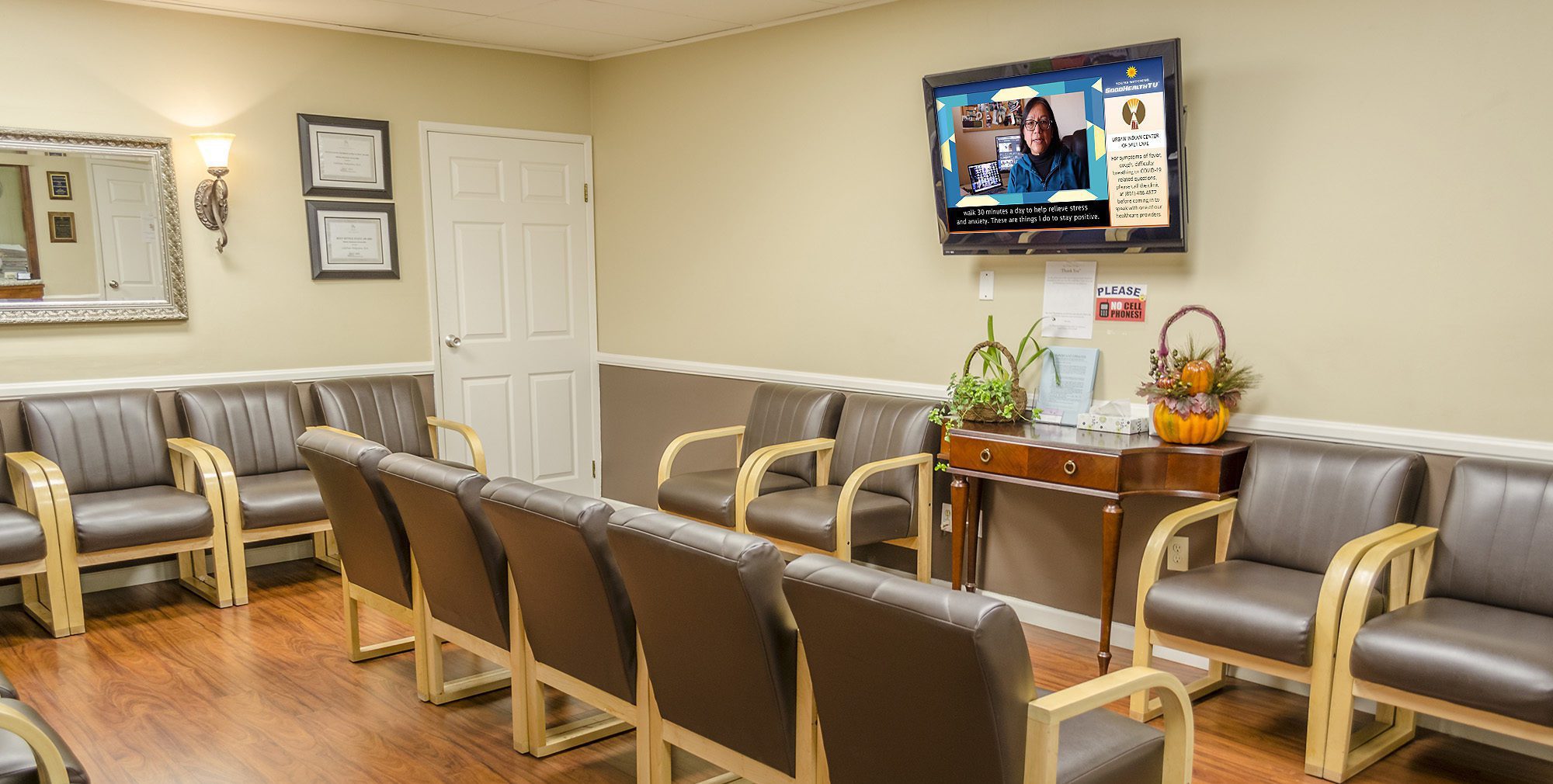
GoodHealthTV® finds the core issues with health literacy and addresses them with clear communication. Basic and pertinent information is delivered in a clear, brief, and easily understood medium. Patients are engaged while they are educated in waiting areas. They are then empowered to apply their learned knowledge. Their confidence enables them to ask the questions they need to be an active participant in their own wellness.

The National Patient Safety Foundation recently rolled out a campaign titled “Ask Me 3”. It has been promoted on GoodHealthTV® to motivate patients to ask their physician three pertinent questions at each visit. They are:

  1. What is my main problem?
  2. What do I need to do?
  3. Why is it important for me to do this?

Raising health literacy is one of the easiest ways to elevate social, economic and health improvement. Since health literacy is so directly linked to health and wellness, Surgeon General Richard Carmona, heavily promoted it in his booklet titled the Surgeon General’s Call to Action to Improve the Health and Wellness of Persons with Disabilities, which can be found on the Surgeon General’s website at surgeongeneral.gov. According to Surgeon General Carmona, “Health literacy can save lives, save money, and improve the health and well-being of millions of Americans.” Together, we can raise the health literacy and wellness for the good of our patients.


Written by Jennifer Skjod for KAT Communications April 16, 2010


Subcribe to News Updates

Enter your email address:

Search

news2

A Call for American Indian and Alaska Native Artists:

National Women’s Health Week

Learn more about Oklahoma City Area Strategies

Animation Creates Positive Health Awareness

Welcome White Earth

Skuya Booya - Case of the Busted Bottles

World Health day

Foot Health Awareness Month

National Public Health Week

Sexual Assault Awareness and Prevention Month

Welcome Haskell Service Unit

National Native HIV/AIDS Awareness Day

Dia-beatable: Diabetes is Treatable

Brain Awareness Week

Poison Prevention Week

Women and Girls HIV/AIDS Awareness Day

National Nutrition Month

Meet and Greet at “RES 2010”

National Colorectal Cancer Awareness Month

2009 Champions

Reservation Economic Summit

Hats off to the Lawton Service Unit

Welcome White Eagle Health Center

Welcome Jicarilla Service Unit

Animated Series Generates Diabetes Awareness

World AIDS Day

Winnebago Smokeout

New Addition to Fort Totten Community

Great American Smokeout Challenge

Lung Cancer Awareness Month

Challenge of Diabetes

Celebrate Native American Heritage Month

Welcome Indian Health Board of Minneapolis

National Dental Hygiene Month

National Domestic Violence Awareness Month

Sudden Infant Death Syndrome Awareness Month

Hearing Aid Awareness Week

Drug-Free Work Week

Oct 16 World Food Day

Stop America's Violence Everywhere Day

Welcome Trenton Community Clinic

National Depression Screening Day

Mental Illness Awareness Week

Fire Prevention Week

Eat More Fruits and Veggies!

National Child Health Day, Oct 5

Super Food of the Day Videos

What are you doing for Child Passenger Safety Week?

World Suicide Prevention Day

Welcome Cankdeska Cikana

Call for Talent

GoodHealthTV™ to be installed in Dulce, NM

Man Up! In Sisseton